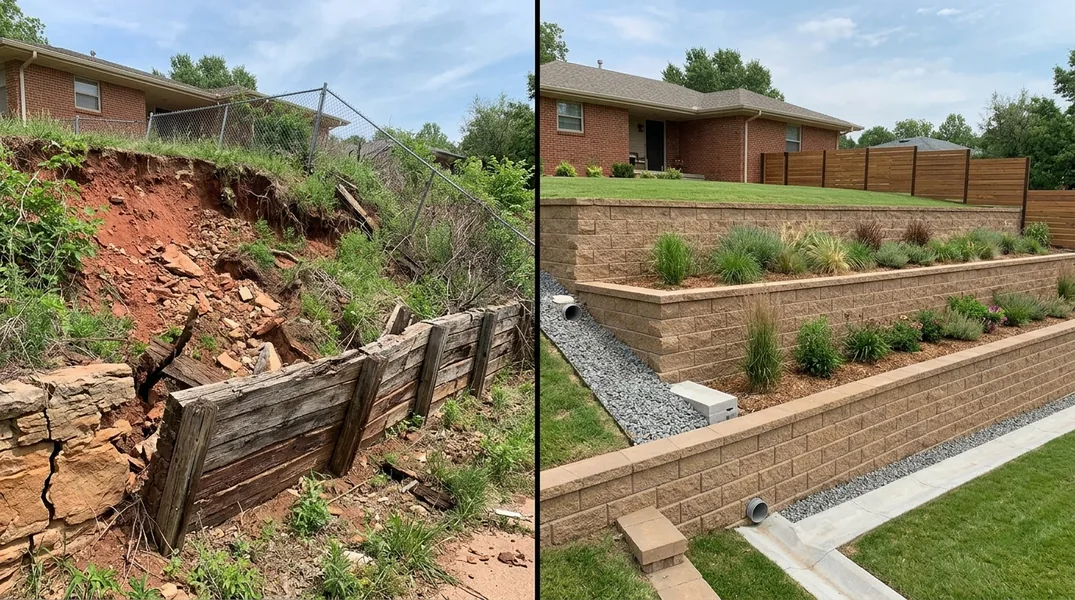
Why Tulsa's Hillsides Put Retaining Walls to the Test
If you live on or near one of the many sloped properties around Tulsa, you already know that a retaining wall is more than a landscaping feature. It holds back soil, protects your foundation, and keeps your yard from sliding downhill after a heavy rain. But Tulsa's climate and soil conditions are uniquely hard on these structures, and that is why so many walls in the area start to lean, bow, or crack long before they should.
The region sits on expansive clay soils that swell when wet and shrink when dry. Tulsa also swings between long dry spells and intense spring storms that dump inches of rain in a matter of hours. That constant cycle of expansion, contraction, and water pressure pushes against a wall from behind. If the wall was not designed with proper drainage, backfill, and footing depth, the soil will eventually win. Understanding these local pressures is the first step toward protecting your property and knowing when to call for help.
The Most Common Reasons Retaining Walls Fail
Most failing walls in the area share a handful of root causes. Poor drainage is the number one culprit. When water cannot escape through weep holes or a gravel backfill zone, it saturates the soil behind the wall and creates hydrostatic pressure that no residential wall is built to handle. Over time, that pressure causes a leaning retaining wall or a bowing retaining wall that needs a fix before it collapses.
Other common problems include inadequate footing depth, missing geogrid reinforcement, and the use of materials that were never rated for the load. A wall that was fine for a two-foot garden bed will fail quickly when it is holding back six feet of saturated clay. Tree roots, settling, and even small lawn irrigation leaks can also undermine a wall's base. If you notice any of these issues, a professional inspection is the fastest way to determine whether you need Retaining Wall Repair or a full replacement.
Warning Signs of a Failing Retaining Wall
Homeowners often miss the early warning signs because they develop slowly. The most obvious is visible movement: a wall that leans toward the street or bows outward in the middle. Look for cracks in the mortar or concrete, gaps between blocks, and soil that has started to spill through the face of the wall. You may also notice sinking or pooling water at the base, which suggests the footing is washing out.
Less obvious signs include doors or gates that suddenly stick, cracks in nearby patios or driveways, and water seeping from the wall after dry weather. In Broken Arrow and Jenks, where many neighborhoods sit on graded slopes, these symptoms are especially common after a wet spring. If you spot any of them, do not wait for the wall to fail completely. A failing retaining wall can become a safety hazard and a much more expensive problem once it collapses.
Retaining Wall Repair Near Me: When to Call a Professional
Small cosmetic cracks can sometimes be patched, but structural movement almost always requires a professional assessment. A contractor will check the wall's alignment, drainage, footing, and soil conditions to determine whether a repair will hold or whether the wall needs to be rebuilt. In many cases, a bowing retaining wall fix involves installing additional drainage, replacing compromised backfill, and adding reinforcement rather than simply patching the surface.
If you are searching for retaining wall repair near me in the Tulsa area, look for a company that specializes in local soil and drainage conditions. Tulsa Retaining Wall offers Retaining Wall Repair and can evaluate whether your wall is a candidate for repair or Retaining Wall Replacement. Call (918) 359-8655 to schedule an inspection and get a clear recommendation before the next storm season arrives.
Preventing Future Failures with Proper Installation
The best way to avoid costly repairs is to build it right the first time. A properly engineered wall starts with a footing that reaches below the frost line, a gravel drainage zone wrapped in filter fabric, and geogrid reinforcement that ties the wall into the soil behind it. For taller walls or heavy loads, Concrete Retaining Walls often outperform block systems because they resist soil pressure and root intrusion more effectively.
Whether you are replacing an old wall or starting fresh, professional Retaining Wall Installation should always include a site assessment and a drainage plan tailored to your slope. Homeowners in Bixby and throughout the metro area can request a free estimate to learn what a durable wall will require. You can also review pricing information online before you call.
Protect Your Property Before the Next Storm
Tulsa's weather will keep testing your retaining wall, but the right design and timely repairs can keep it standing for decades. If your wall is leaning, bowing, or showing cracks, do not wait for a collapse. Contact Tulsa Retaining Wall at (918) 359-8655 or visit the website to request a free estimate. A professional inspection now can save you thousands in emergency repairs later.
Looking for a professional retaining wall contractor in Tulsa? Tulsa Retaining Wall responds fast for all your retaining wall needs.
Get a Free QuoteOur services: Retaining Wall Installation · Retaining Wall Repair · Retaining Wall Replacement